

Diagnosis of male infertility
Statistics show that in every second case, couple’s infertility is associated with the male factor.
The source of the problem can be either a decrease in sperm quality, hormonal disorders or anatomical features, or lifestyle factors.
That is why a thorough diagnosis of male infertility is the basis for further successful pregnancy.

What is male infertility
Male infertility is defined as the inability to conceive a child during a year of regular sexual activity with a fertile partner.
This condition is caused by a number of reasons, among which problems with sperm production and quality play a leading role. Male infertility is not an independent disease, but a consequence of other health problems.
To determine the exact causes, it is necessary to undergo a comprehensive examination, and this should be done as soon as possible, as the probability of fertilization decreases over time.
Causes of infertility in men
The ability to conceive may be reduced or absent due to a variety of factors that affect the quality and quantity of sperm or the functioning of the reproductive system in general.
Among them:
Inflammatory and infectious diseases of the reproductive organs
chronic prostatitis (inflammation of the prostate gland), epididymitis (inflammation of the epididymis), past sexually transmitted infections (can cause obstruction of the urethra due to inflammation);
Structural anomalies
varicocele (enlargement of the veins of the spermatic cord), cryptorchidism (undescended testicle), abnormalities of the genital organs (hypospadias, etc.), adhesions formed after inflammation or surgery and disrupting spermatogenesis or sperm patency;
Hormonal disorders
Thyroid, pituitary, or diabetes mellitus disorders can have a significant impact on spermatogenesis;
Genetic and congenital factors
Some men have congenital mutations in the genes responsible for sperm production;
Epidemic mumps in childhood
The virus can damage the cells that produce sperm, impairing its quality and leading to fertility problems;
Viral hepatitis
In the liver, testosterone is converted to the active metabolite dihydrotestosterone. If the liver function is impaired, sperm production is also impaired;
Neurological and immune disorders
head or spinal cord injuries, neuroinfections, and certain mental illnesses can disrupt the ejaculation process, causing retrograde ejaculation (during ejaculation, sperm enters the bladder instead of the urethra), impotence - the inability to achieve or maintain an erection;
Bad habits
Smoking, alcohol abuse, and drug use directly affect sperm quality;
Obesity.
The predominance of fatty, sweet and flour products in the diet leads to overweight, which negatively affects hormonal levels;
Toxic effects
work in chemical, metallurgical or asphalt production facilities, as well as prolonged exposure to ionizing radiation, high temperatures or high-frequency currents affect the function of the testes;
Taking anabolic steroids
the use of hormonal drugs for muscle growth suppresses the body's own hormone production.

Diagnosis of infertility in men: where to start
Assessment of male fertility usually begins with a semen analysis. To ensure the correctness of the results, it is recommended to take this test twice with a 2-week break, as sperm counts can vary under the influence of temporary factors.
A specialist in the laboratory examines the main characteristics of the ejaculate: its quantity, content, shape, and sperm motility. Normally, the sperm count should be at least 15 million/ml, of which more than 58% should be live. The volume of the semen itself should be in the range of 1.5-5 ml.
Sperm motility is an important indicator of the spermogram, as it shows whether they can reach the egg for fertilization to occur – there should be more than 40% of such germ cells.
The sperm morphology score is also important for natural conception, as defects in structure or shape can affect the ability of germ cells to fertilize. The detection of any abnormalities in the analysis is an indication to consult a urologist or andrologist for further examination and to determine the cause of the abnormalities.
Sign up for a consultation
Leave your contact information and our consultant will call you back and select the most convenient time, date, and doctor for a visit to the reproductive center or online consultation.
Classification of male infertility
Male infertility is divided into several main types depending on the cause and mechanism of reproductive dysfunction.
Secretarial
This form of infertility is associated with impaired testicular function, as a result of which they are unable to produce a sufficient number of sperm of proper quality. The main cause is hormonal imbalance. The manifestations of hypogonadism (hypofunction of the gonads) are testosterone deficiency, underdevelopment of the genitals, oligospermia (reduced number of germ cells) or azoospermia (complete absence of sperm in the family) in the spermogram.
Hypogonadism (or androgen deficiency) can be congenital or acquired. Congenital is most often associated with genetic mutations, such as Klinefelter’s syndrome, in which there are more than two X chromosomes in a man’s genome (normally one X chromosome), which leads to infertility. In addition, if a pregnant woman takes certain groups of drugs (e.g., estrogens), a newborn boy may have fertility problems in the future. Acquired androgen deficiency occurs as a result of injuries, infections, or tumors and can be primary (associated with testicular disorders) and secondary (disorders of the pituitary or hypothalamus, which makes them unable to fully stimulate the gonads (sex glands) to produce hormones).
Excretory
This form of infertility occurs due to difficulty passing sperm through the vas deferens. At the same time, their production is not impaired, but they cannot get into the seminal fluid. This condition can be caused by chronic inflammatory processes (e.g., prostatitis, spermato-cystitis), the pathogens of which damage the vas deferens. This leads to a deterioration in the quality of sperm in the form of asthenozoospermia (low motility of germ cells), teratozoospermia (abnormal shape), pyospermia (pus in the sperm), and sperm adhesion. In addition, excretory infertility can be caused by obstruction (blockage) of the vas deferens due to congenital defects, scars after inflammation or surgery, as well as genital developmental abnormalities (hypospadias, epispadias). The obstructive form (caused by obstruction) is manifested by azoospermia (sperm do not enter the seminal fluid).
Mixed
The presence of this form of infertility in a man means that he has both a disordered sperm production process and obstacles to its excretion. This leads to characteristic manifestations in the spermogram – oligospermia or azoospermia.
Other types of infertility
In addition, there is autoimmune infertility – when the body produces antibodies against its own sperm. Psychogenic – caused by severe stress or psychological problems (usually manifested by erectile dysfunction). Infertility associated with retrograde ejaculation is a disorder in which sperm enters the bladder instead of the urethra. If the cause of male infertility could not be identified and the sperm count is poor, idiopathic infertility is diagnosed.
Methods of diagnosing male infertility
During the consultation, the urologist or andrologist asks the patient in detail about the duration of conception attempts, regularity of sexual activity, past illnesses (infections, injuries, surgeries), the presence of chronic pathologies, medication, heredity, and the impact of bad habits or factors at work.
This helps to understand the overall picture and rule out certain conditions. The specialist also conducts a physical examination and palpation of the genital organs (testicles, epididymis, prostate) to identify structural abnormalities.
After that, if necessary, additional laboratory and instrumental tests are prescribed:
to determine the volume of semen, motility, number and morphology of spermatozoa.
detects pathologies that can affect the quality of sperm.
to detect sexually transmitted infections.
FSH, LH, testosterone (total and free), prolactin, estradiol.
in case of suspected immunologic factor of infertility to detect anti-sperm antibodies that can stick spermatozoa together, preventing fertilization.
to assess the function of the prostate gland and exclude inflammation in it.
chromosomes help to identify congenital abnormalities that occur in about 30% of male infertility.
allows you to visualize varicocele, cysts, tumors, inflammatory processes and assess blood supply using Doppler.
The test determines the degree of damage to the genetic material in the sperm, which can cause unsuccessful fertilization attempts, miscarriages, or embryo abortion.
is performed in case of diagnosed azoospermia (absence of sperm in the ejaculate). This method allows you to determine whether sperm are produced in the testes, but they simply do not enter the vas deferens due to obstruction (obstructive form), or whether the process of spermatogenesis itself is impaired (secretory form).
Diagnostics of male infertility allows not only to confirm the fact of infertility, but also to accurately determine its cause and prescribe adequate treatment.
Procedures for men at IVMED
How to prepare for the diagnosis of male infertility
The main test that begins the diagnosis of infertility in men is a spermogram. However, in order for its indicators to be correct and reflect the real reproductive picture, there are certain rules for preparing for the test.
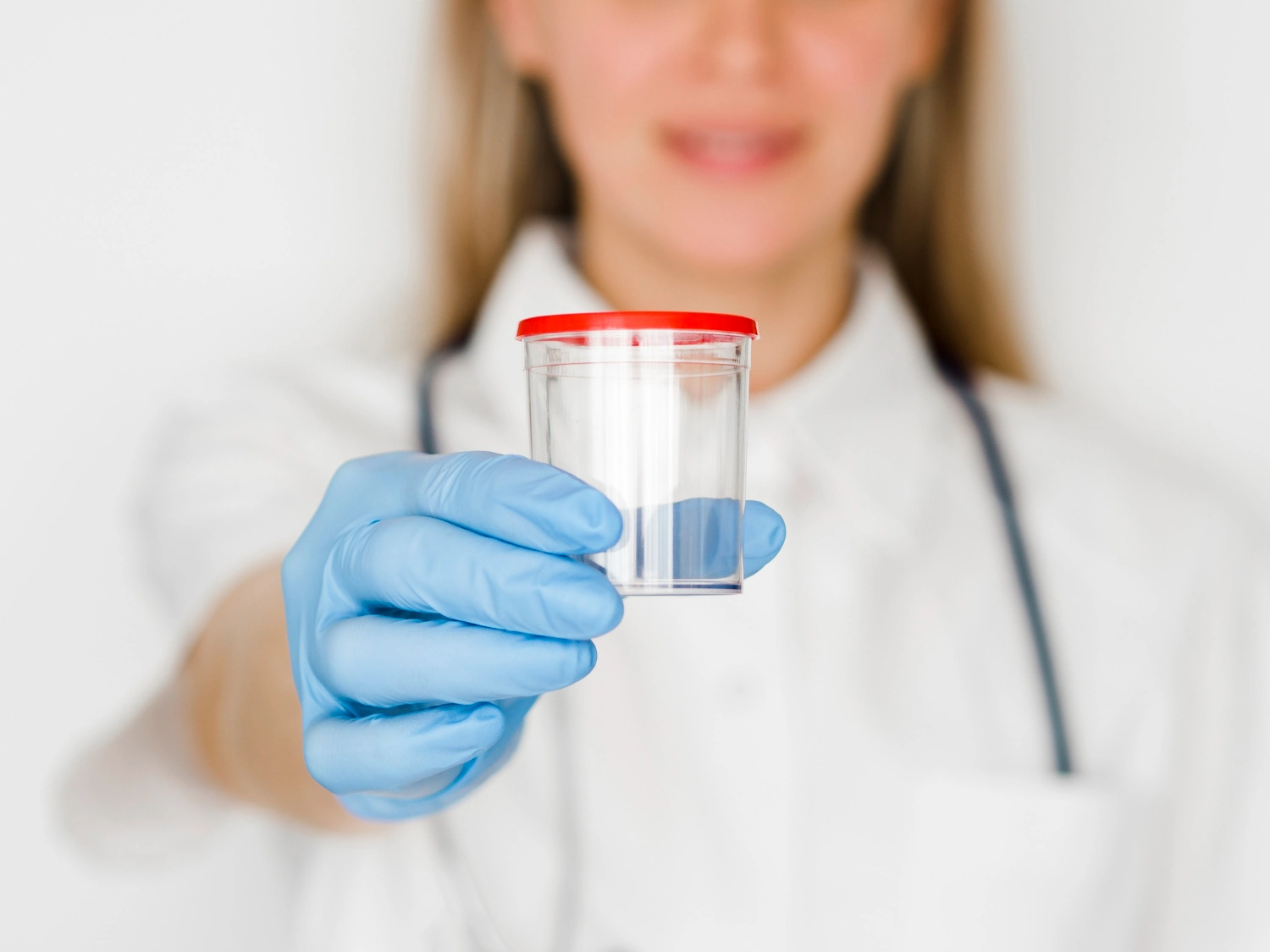
Three days before the spermogram, it is recommended to completely abstain from any form of sexual activity that leads to ejaculation. Also, during this period, avoid strenuous physical activity, sauna, bath, and hot baths. As for alcoholic beverages and cigarettes, give up the former for at least a week and the latter for 3 hours before the test. If you are taking any medications on a regular basis, be sure to inform your doctor so that he or she can take this into account and provide recommendations for a possible pause in their intake.
Before collecting the sample, keep your hands and genitals clean - use ordinary unscented soap and warm water. The process of collecting ejaculate is carried out in a sterile container in a medical facility by masturbation. Do not use lubricant or saliva. It is necessary to collect the entire portion of sperm without losing a single drop.
If the doctor suggests other tests to diagnose your problem, he will tell you in detail how to prepare properly in your case and answer all your questions.
Treatment of infertility in men
After a comprehensive diagnosis, the andrologist chooses the optimal treatment tactics, which depends on the identified cause. All methods are aimed at achieving one goal – improving sperm quality or overcoming obstacles to conception. Every man who dreams of becoming a father is recommended to establish a work and rest regimen, add regular but not exhausting physical activity, and reconsider his bad habits.
Conservative treatment
Drug treatment of infertility is used in cases of hormonal imbalance to correct hormone levels. If the infectious and inflammatory genesis of the infertility problem is detected and the causative agent of the disease is determined, anti-inflammatory and antibacterial therapy is prescribed. It usually lasts for 2-3 months under the supervision of a doctor, followed by a repeated spermogram to assess its effectiveness.
Surgical treatment
It is used in cases of structural abnormalities of the reproductive system that can impede the passage of sperm and cause infertility. It is also used in case of diagnosed varicocele (dilated testicular veins), which can disrupt the process of spermatogenesis. In the case of obstructive azoospermia, sperm can be surgically removed from the testicles and then used in the IVF program.
Assisted reproductive technologies
If the identified cause of infertility makes it impossible to conceive naturally, assisted reproductive technologies come to the rescue:
- Intrauterine insemination. The introduction of specially prepared male sperm directly into the uterine cavity. It is used in case of female infertility caused by a cervical factor, immunological infertility factor, low sperm quality, erection problems, and abnormalities of the urethra.
- In vitro fertilization. In vitro fertilization, also known as IVF. This method helps in solving the problems of infertility of various genesis, including immunological.
- Intracytoplasmic sperm injection (ICSI). A method in which one sperm is injected directly into the egg. It allows you to become a father even with a minimal number or low sperm motility.
Even in the most difficult cases, when it is impossible to obtain one’s own germ cells, it is still possible to use donor sperm as part of an IVF program. If the reason for the absence of pregnancy is mixed and is also related to the female factor, a gynecologist is necessarily involved in the diagnosis and treatment process, who, together with a reproductive specialist, determines the optimal tactics for assisted fertilization.
Prevention of infertility in men
For men who want to become fathers, adherence to a healthy lifestyle should be not just words, but a life credo.
Regular but moderate physical activity is an essential element of fertility preservation. A balanced diet rich in proteins, vitamins A, E, C, B, as well as trace elements and coenzymes (zinc, selenium, L-carnitine, coenzyme Q10) is essential for proper spermatogenesis. Quitting bad habits is also a necessary step on the path to parenthood, as smoking and alcohol directly affect sperm quality.

It is important to avoid extreme temperature effects on the testicles, such as regular overheating in a sauna or prolonged hypothermia, as they can disrupt the process of spermatogenesis. Regular sex life and weight control are equally important, as excessive body weight can lead to hormonal disruption.
Be careful with self-treatment, as many medications (sedatives, sleeping pills, beta-blockers) have a negative impact on fertility. The best solution is to have regular preventive examinations by a specialist to detect and eliminate any disorders in a timely manner. A conscious approach to your health increases the chances of successful conception and the birth of a healthy child.
Which doctor to visit for the diagnosis of male infertility
When the question of diagnosing men’s health arises, the first specialist to visit is an andrologist. It is his or her activity that is aimed at solving male fertility problems. However, depending on the situation, an andrologist may recommend consultations with other specialists: a urologist, endocrinologist, or even a geneticist, if there is a suspicion of a hereditary genesis of infertility. In search of the cause, the doctor does not limit himself to licking tests – he carefully examines the patient’s lifestyle. Often, it is the correction of external factors that has a significant positive effect and helps in solving problems with conception.
After conducting the necessary examinations and determining the cause of the absence of pregnancy, further treatment may require a consultation with a reproductive specialist. It is this specialist who selects modern methods of fertility restoration, including assisted reproductive technologies. A visit to the IVMED fertility clinic in Kyiv allows you to get an integrated approach in close cooperation between an andrologist and a reproductive specialist, which significantly increases the couple’s chances of having a healthy baby.
Doctors of the IVMED clinic










Extract of information from the License Register of the Ministry of Health of Ukraine for medical practice

DSTU ISO 9001:2015-1 Certificate

DSTU ISO 9001:2015-2 Certificate

ISO 9001:2015 Certificate

ISO 9001:2015 Certificate No. 2

Accreditation certificate of the highest category