

st. Antonov Aviation Design Bureau, 2-B
Mon-Sat: 8:00-18:00
st. 2A, Roman Shukhevych str.
Mon-Fri: 09:00 - 17:00, Sat: 09:00 - 13:00
st. Antonov Aviation Design Bureau, 2-B
Mon-Sat: 8:00-18:00
st. 2A, Roman Shukhevych str.
Mon-Fri: 09:00 - 17:00, Sat: 09:00 - 13:00
Male infertility can have dozens of causes, from hormonal disorders and infections to problems with sperm count or motility. Some of these conditions become apparent from the results of standard tests. However, sometimes pregnancy does not occur due to other factors that can be detected by special laboratory tests. One of them is the MAR test, which helps to diagnose immunological infertility, a condition when a man's body "attacks" his own sperm. This examination allows you to identify the cause of the problem with conception in a timely manner and choose the right treatment.
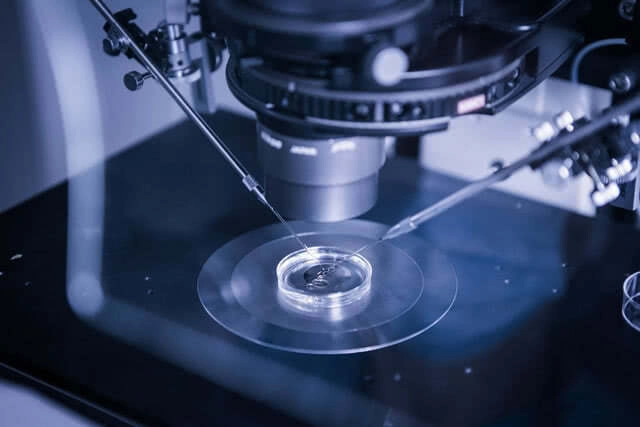
MAR test is a laboratory immunological test of semen. It determines the presence of anti-sperm antibodies (ASA), which can attach to sperm and cause immunological infertility. These are specific immunoglobulins that are formed in the male reproductive tract - in the testicles, epididymis, and ejaculatory ducts. They are directed against the structure of the spermatozoon: they can bind to its head, middle part, tail, or several parts at the same time.
Normally, the blood-brain barrier reliably isolates the cells involved in sperm formation, protecting them from the effects of their own immune system. If this barrier is disrupted due to infections (bacterial or viral), obstruction of the vas deferens, varicocele, testicular tumors, cryptorchidism, trauma, surgery, or endocrine disorders, an autoimmune reaction occurs with the formation of specific antibodies to sperm.
If antibodies cover the sperm in large quantities, they interfere with their normal mobility, penetration into the cervical mucus, interaction with the egg, and fertilization. That is why this examination is one of the key tests in the diagnosis of male infertility, especially in situations where other tests do not give a clear answer.
The doctor prescribes the MAR test in cases where standard tests are not enough or there is reason to suspect an immune factor in infertility.
Main indications:
The test is not performed on couples preparing for IVF/ICSI or intrauterine insemination.
Usually, the MAR test has no strict contraindications, but there are situations when it is temporarily not recommended. The test is not performed:
In such cases, screening often gives false information, so the doctor may advise you to undergo treatment or wait a certain period before taking the test.
Features and benefits of the MAR test:
At first glance, both the spermogram and MAR test are ejaculate tests, but they have completely different tasks.
A spermogram evaluates the physical parameters of sperm: concentration, motility, sperm shape, pH, viscosity, and ejaculate volume. And MAR test is an analysis that shows only the presence of an immunological factor of infertility.
Features of the spermogram:
Features of the MAR test:
Both tests complement each other and together give a complete picture of a man's reproductive health.
Preparation is simple, but very important for the accuracy of the study. Therefore, certain recommendations must be followed before donating ejaculate:
Meeting these conditions will ensure the most reliable and informative result.
The MAR test procedure is simple for the patient and completely painless.
A man donates semen by masturbation into a sterile container in a specially equipped room. The sample should not come into contact with foreign substances.
The laboratory technician checks the quality of the sample and prepares it for analysis. At the initial stage, the viscosity, volume, and other parameters of the biomaterial are determined. These data are important for the correct conduct of the study.
Special reagents that bind to the ASA are added to the sample. These reagents allow you to visually detect the presence of anti-sperm antibodies on the surface of spermatozoa.
The laboratory technician observes and records the data under a microscope - whether the particles "stick" to the sperm. If ACAs are present, the reagents form a visible complex on their surface, which allows the detection of so-called "blocked" cells.
The laboratory technician determines the percentage of spermatozoa with lgA or lgG antibodies and generates the final test result.
This effective diagnostic method allows you to quickly and accurately determine whether there is an immunological cause of infertility and find ways to solve the problem based on the data obtained.
The results of the MAR test are given as a percentage - this is the proportion of sperm that are covered with antibodies.
Possible options:
0-10% - negative test. Antisperm antibodies are completely or almost absent, so an immunological cause of infertility is unlikely.
10-39% is the threshold value. It may indicate an initial immunologic process, and a consultation with an andrologist and repeated ejaculate donation after some time is required.
40-100% - a positive MAR test. The majority of sperm are covered with antibodies, this result indicates a high probability of immunological infertility.
However, doctors note that a positive test does not mean an absolute impossibility of having children, but indicates the need for infertility treatment.
Usually, the test is performed quickly, as the technique does not require long-term cultivation or complex material processing. In most clinics, the result can be obtained on the day of sperm donation - the analysis takes only 1-3 hours. This is especially convenient for couples planning further examination or assisted reproductive technology procedures. It also allows you to quickly make decisions about treatment tactics.
At the IVMED fertility clinic in Kyiv, the MAR test is performed according to standard protocols using high-quality reagents. Its approximate price is 840 UAH, and a specialist consultation can be paid additionally. This test is affordable and informative, which makes it an appropriate choice at the stage of diagnosing possible infertility.
Is it possible to conceive a child with a positive MAR test?
Yes, it is possible. It all depends on the level of anti-sperm antibodies. At rates of more than 50-60%, natural conception can be difficult, but ART methods, in particular intrauterine insemination or ICSI, help to successfully solve this problem.
How to treat elevated levels of antisperm antibodies?
The main treatment includes anti-inflammatory therapy, correction of hormonal levels, elimination of infections, antioxidant regimens, and sometimes immunosuppression (weakening of the immune system).
Can a MAR test be a false positive?
Yes, if the preparation was incorrect or there is an acute inflammatory process. Therefore, if in doubt, the doctor sometimes recommends retaking the test in 2-3 weeks.
When is the best time to take the MAR test?
The test can be done on any day, subject to the rules of preparation. It is often prescribed together with a spermogram.
How many times do I need to take the MAR test?
Usually, one time is enough. However, in case of treatment or thresholds, it is recommended to take the test again in 1-3 months.
Leave your contact information and our consultant will call you back and select the most convenient time, date, and doctor for a visit to the reproductive center or online consultation.
Procedures
Specialists of this service
Make an appointment
By clicking, you accept the terms and conditions “Consent to the collection and processing of personal data” and “Public agreement on the provision of medical services”