
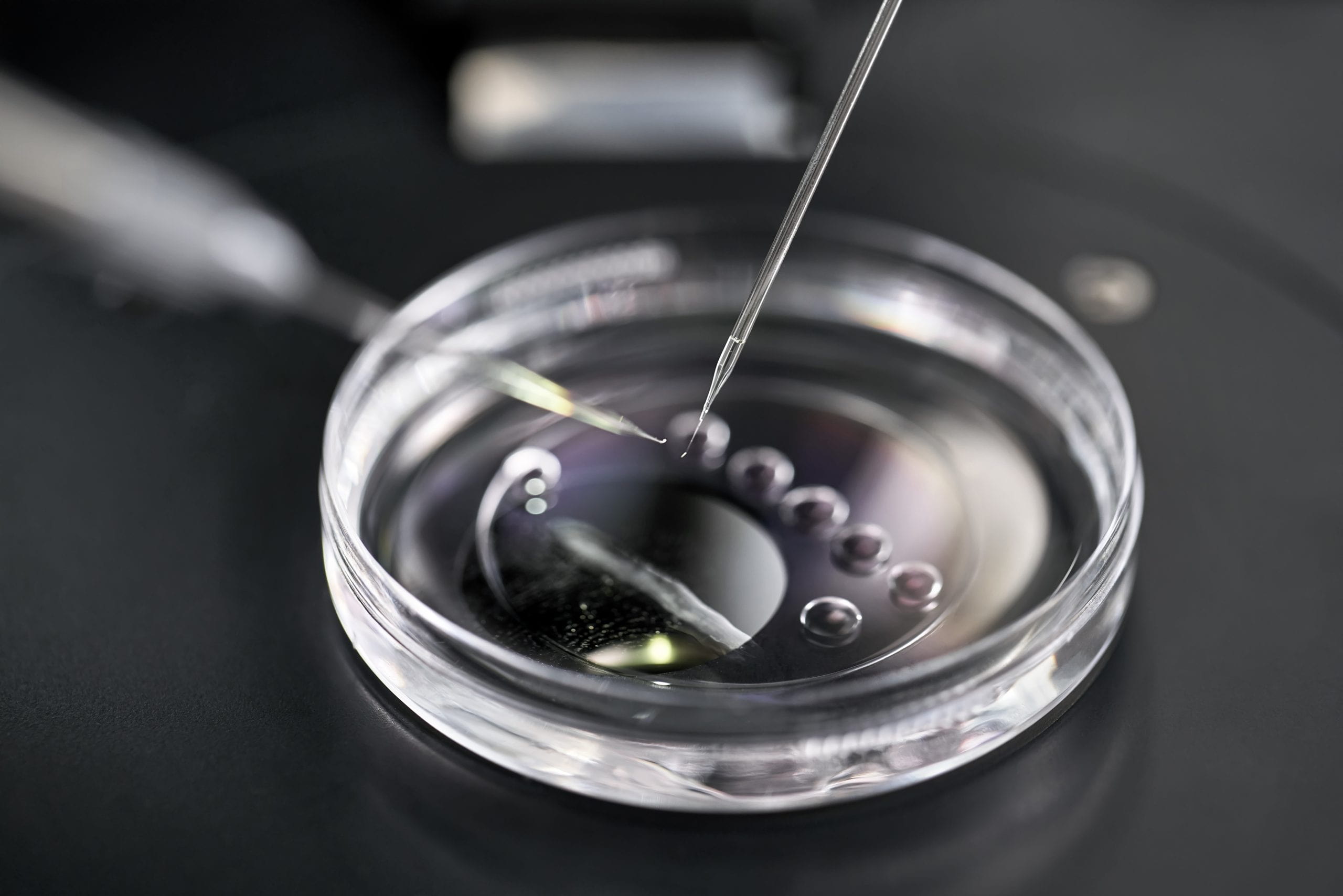
Nuclear transfers
Nuclear transfers are unique methods of infertility treatment that enable future parents to have a genetically related child.
*No medications to stimulate ovulation
Benefits of the Nuclear Transfer Program
There are different nuclear transfer techniques - and all of them have been developed by a team of experienced IVMED embryologists, the optimal choice of nuclear transfer technique will depend on the quality of the patient's eggs.
In the course of nuclear transfers, it is possible to increase the number of reconstructed reproductive cells in accordance with the number of the patient's reproductive cells and to improve the quality of the patient's reproductive cells through cytoplasmic donation.
The world’s first child after pronuclear transfer was born in Ukraine in 2017.
Direct nuclear transfers
This is the transfer of nuclear genetic material from a patient’s reproductive cell to a donor reproductive cell.
The donor’s reproductive cell is stripped of its nuclear genetic material in advance.
It is recommended for young patients (35-37 years old) who have:
- embryo development stops
- low proportion of mature reproductive cells, and they do not mature on their own
- all reproductive cells mature, but fertilization does not occur even with donor sperm, or with assisted oocyte activation (AoA), or fertilization occurs, but only abnormally
- patients who have normal reproductive cells, fertilization occurs normally, but then the development of the embryo stops before reaching the blastocyst stage
- patients who do not have mature reproductive cells
- patients with certain genetic mutations of the nuclear genome (mutations that affect only those genes that function in reproductive cells)
Reverse nuclear transfers
Transfer of nuclear genetic material from the donor’s reproductive cell to the patient’s reproductive cell.
The patient’s donor reproductive cell is stripped of nuclear genetic material in advance.
- These are auxiliary treatments performed to control the efficiency of nuclear transfers.
- The reverse reconstructions obtained as a result of this technique preserve the patient's mitochondrial DNA and can be used for transfer only at the specific request of the future parents. In this case, the future parents choose an egg donor in advance.
Stages of the Nuclear Transfer Program
First visit to IVMED
Consultation with a reproductive specialist. Gynecological and ultrasound examination of the patient. Evaluation of available laboratory tests and medical records. The result is a proposal for an Individual Diagnostic Plan.
Accurate diagnostics
It is carried out according to the Individual diagnostic plan. It can be performed both in the IVMED clinic and in any other clinic. During the diagnostic stage, subsequent visits to IVMED are possible.
Individualized treatment plan
The IVMED clinic doctor will offer the best treatment options for your situation. We recommend IVF only when it is necessary. The doctor of the IVMED clinic together with YOU will determine an individual treatment plan for YOU.
Effective treatment
Infertility treatment at the IVMED clinic is not necessarily IVF. We have successful experience in treating patients with habitual miscarriage and immunological forms of infertility. 30% of patients achieve pregnancy at IVMED without IVF methods.
The main package of services in the IVF program "Nuclear transfer"
Nuclear transfers
Reconstruction of eggs (nuclear transfer service)
Preparation, cultivation and fertilization
Thawing cryopreserved sperm and preparing for fertilization. Fertilization by ICSI. Cultivation of embryos
Fertilization of eggs and cultivation of embryos
Cryopreservation of embryos by vitrification using 10 cryopreservation cryotypes
Storage
Storage of cryopreserved embryos for 1 month
Leave your contact information and our consultant will call you back and select the most convenient time, date, and doctor for a visit to the reproductive center or online consultation.