
st. Antonov Aviation Design Bureau, 2-B
Mon-Sat: 8:00-18:00
st. 2A, Roman Shukhevych str.
Mon-Fri: 09:00 - 17:00, Sat: 09:00 - 13:00
st. Antonov Aviation Design Bureau, 2-B
Mon-Sat: 8:00-18:00
st. 2A, Roman Shukhevych str.
Mon-Fri: 09:00 - 17:00, Sat: 09:00 - 13:00
In gynecological practice, there are situations when conservative methods of treatment are not enough, and the doctor is forced to recommend a curettage of the uterine cavity. This procedure is performed to diagnose or eliminate pathological processes in the uterine cavity that can negatively affect a woman's health.
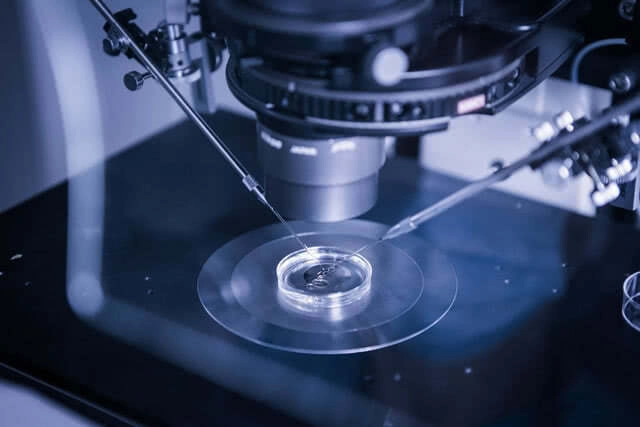
A curettage or curettage of the uterus is a gynecological procedure during which a doctor uses a special instrument (curette) to remove the upper layer of the endometrium for diagnostic or therapeutic purposes. It helps to cleanse the uterus, obtain tissue for examination, and prevent the development of complications. The procedure is performed under general anesthesia or local anesthesia, so it is painless for the patient. The surgical intervention itself lasts about 20-30 minutes, but its importance for a woman's health is often decisive.
During curettage, the cervical canal is often scraped, as pathological changes can be localized in the cervix. The material obtained during the intervention is sent for histological analysis. This allows us to assess the condition of the mucosa and exclude cancerous or precancerous changes or hormonal disorders, establish an accurate diagnosis and choose the right treatment.
Usually, a doctor prescribes the procedure if there is a threat to a woman's health or a diagnosis needs to be clarified, but only after a full examination. There are several clinical situations when uterine curettage is not just recommended, but necessary.
If the bleeding lasts too long or is very heavy, occurs between menstruation, after sexual intercourse, or appears after the onset of menopause, it poses a danger to a woman's health. The procedure helps to cleanse the uterine cavity from pathologically altered areas of the endometrium, stabilize the woman's condition and determine the cause of the pathology. This is the most effective method, especially if drug therapy has failed.
In case of polyps or hyperplasia, the method is used to eliminate pathological tissue growth. Curettage allows you to remove excessively thickened endometrium, polyps with the pedicle, cleanse the mucosa and prevent the degeneration of normal cells into precancerous or cancerous processes. Based on the results of a histological analysis that determines structural changes in the tissues, the doctor sees whether the patient needs further treatment.
In case of suspected endometrial or cervical cancer, samples obtained during cervical curettage or uterine mucosa scraping allow to determine the presence of atypical cells, the degree of pathological changes and the need for surgical intervention. This is an important procedure for the early diagnosis of oncology, which allows for timely treatment.
After a spontaneous abortion or a miscarriage, a curettage can remove the remains of the fetal egg and prevent infections, bleeding, inflammation, and fertility problems in the future.
Sometimes after childbirth, fragments of the placenta can remain in the uterus. This can lead to infections and bleeding, as well as septic complications. A curettage of the uterine cavity allows you to quickly and safely remove the remaining tissue and restore the functionality of the organ.
In some situations, the procedure may be temporarily or completely prohibited. These include:
The decision to perform the operation is made by the doctor only after a comprehensive examination of the woman.
Features and benefits of the procedure:
For many women, a cervical curettage is an important step towards recovery, normalization of hormonal levels, and planning a future pregnancy.
Proper preparation reduces risks and helps to recover faster after the procedure.
The gynecologist assesses the general condition, conducts an examination, an ultrasound, and determines the need for intervention. He also tells you about the specifics of the procedure, possible risks, and the expected result.
Usually, a complete blood count, biochemistry, coagulation test, smears for flora, cytology and infections, tests for HIV, hepatitis, and RW are prescribed. A referral is also made for an ECG to check the functioning of the heart.
You should not eat or drink in the morning 8-12 hours before the surgery. After all, the operation is performed under anesthesia and the presence of food in the stomach increases the risk of complications, such as vomiting during anesthesia and the ingestion of stomach contents into the respiratory tract. Do not take any medications without consulting your doctor 2 weeks before the procedure. Do not have sex, do not use any vaginal products 3 days before the curettage (suppositories, douches, tampons, intimate hygiene products, etc.).
It is important for a woman to understand the specifics of the procedure, that it is completely controlled and safe, and that it helps to avoid serious complications. Fears and tension have a negative impact on the emotional state, can increase sensitivity to pain, and complicate recovery after the intervention.
The procedure is usually performed on days 5-7 of the cycle (in case of uterine bleeding, on any day) and lasts 20-30 minutes. Although the duration of the uterine scraping is quite short, each step is performed carefully to ensure the patient's safety and to obtain a high-quality sample for analysis.
General anesthesia, medication sleep, or local anesthesia - the doctor chooses the optimal type of anesthesia based on the woman's health status and indications. General anesthesia is most often used when the patient falls asleep and does not feel pain. Local anesthesia is less common - in this case, anesthetics are injected into the cervix, which leads to a decrease in its sensitivity.
After insertion of the gynecological mirror, the cervix is fixed with forceps so that it does not move during the procedure. After that, the depth of the uterine body is measured using a metal uterine probe. To provide access to the uterine cavity, its cervix is gently dilated using dilators of different diameters. The dilation occurs gradually, without sudden movements, under constant medical supervision, so as not to injure the tissues.
Using a curette, the doctor, if necessary, takes tissue from the cervical canal - the collected material allows to assess the condition of the cervical epithelium and identify pathological conditions. After that, a curettage of the uterus is performed - the doctor carefully removes the endometrial layer or pathological formations (polyps, synechiae, fetal remains, etc.). The manipulation is performed evenly over the entire surface to avoid gaps. Its purpose is to clean the uterine cavity and obtain a high-quality sample for analysis.
The removed tissue is collected in a sterile container and sent to the laboratory. Histology is a key step in establishing an accurate diagnosis - it helps to determine the structure of the endometrium, detect inflammatory or hormonal changes, and diagnose polyps, hyperplasia, and tumors.
After removing the tissues, the doctor carefully examines the uterine cavity, checks for active bleeding, and may administer medications to reduce the uterus. After that, the instruments are carefully removed. The procedure is complete.
After the procedure, the patient is transferred to the ward. Within 1-2 hours, the doctor monitors the patient's blood pressure, general condition, intensity of discharge, and reaction to anesthesia. After stabilization, he gives the patient recommendations for recovery and discharges her home.
Rehabilitation after the intervention takes 1-2 weeks. During this time, it is important to follow the doctor's recommendations to avoid undesirable consequences after curettage.
What is recommended to do:
Given that the intervention was in the layer of the uterus that is directly involved in the menstrual cycle, its recovery may be delayed and may differ in the amount of discharge. Usually, the cycle returns to normal in 4-6 weeks.
To avoid infections and bleeding, a woman should know what not to do after curettage:
If you follow these rules, rehabilitation will be faster and without undesirable consequences.
An ultrasound examination is prescribed after the first menstrual period after the intervention to:
Ultrasound after curettage in menopausal women is performed in 2-4 weeks.
Although the procedure is considered safe, some complications are sometimes possible afterwards:
Complications after a uterine curettage are more likely to occur either because the patient neglects the rules for recovery or because of the doctor's negligence. Therefore, it is worth following the recommendations of a specialist and performing such operations in specialized clinics that have modern equipment and qualified staff.
Usually, a curettage of the uterine cavity does not affect a woman's ability to become pregnant and give birth to a healthy child. With proper recovery and no consequences, pregnancy can be planned in 3-6 months. However, in some complications, such as synechiae or endometrial trauma, there may be temporary difficulties with conception. Such situations are rare and are mostly corrected by treatment or an artificial insemination program .
The average cost of a procedure in private clinics in Ukraine ranges from UAH 4,000 to 7,000. The price takes into account the type of anesthesia, the complexity of the operation, the level of the medical facility, the need for tests and hospitalization. In the IVMED fertility clinic in Kyiv, a curettage of the uterine cavity costs about 5,350 UAH. In any case, the issue of cost can be discussed at a consultation.
IVMED offers women comfortable and safe conditions for various gynecological procedures, including uterine curettage. In addition to using modern equipment and the latest techniques, our center has other advantages:
"IVMED is a place where they care not only about the result, but also about the psychological comfort of patients!
Leave your contact information and our consultant will call you back and select the most convenient time, date, and doctor for a visit to the reproductive center or online consultation.
Procedures
Specialists of this service
Make an appointment
By clicking, you accept the terms and conditions “Consent to the collection and processing of personal data” and “Public agreement on the provision of medical services”