

st. Antonov Aviation Design Bureau, 2-B
Mon-Sat: 8:00-18:00
st. 2A, Roman Shukhevych str.
Mon-Fri: 09:00 - 17:00, Sat: 09:00 - 13:00
st. Antonov Aviation Design Bureau, 2-B
Mon-Sat: 8:00-18:00
st. 2A, Roman Shukhevych str.
Mon-Fri: 09:00 - 17:00, Sat: 09:00 - 13:00
Ovarian reserve is a measure of the number of follicles in a woman's ovaries that determines her reproductive potential. In each menstrual cycle, a certain pool of follicles is activated in the ovaries, but only one follicle becomes dominant and matures to ovulation, while the rest gradually regress (die).
That is why the ovarian reserve naturally decreases over time, and its assessment helps to understand the real possibilities of a particular woman to become pregnant and to draw up a reproductive plan. Next, let's look at how many follicles a woman has normally, when an ovarian reserve assessment is prescribed, and what to do in case of unsatisfactory results.
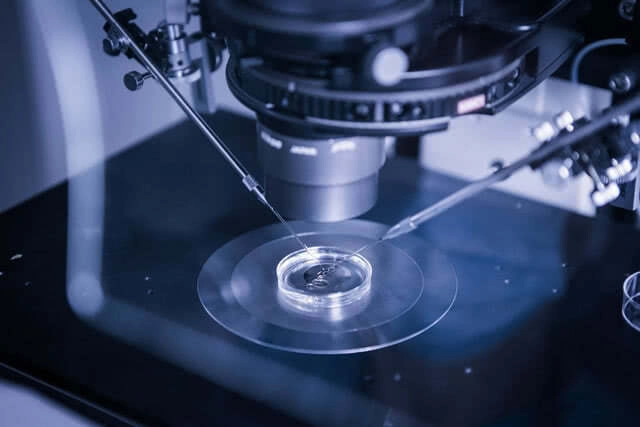
It is important to know how many follicles there should be in the ovary to distinguish the norm from pathology. The number of follicles naturally decreases with age, so doctors are guided by certain norms (in both ovaries):
Important! These are average values that may differ depending on individual characteristics. The follicle count is assessed together with hormonal parameters, as only an integrated approach gives an accurate picture of the ovarian reserve.
The quality of the germ cells of both partners plays an important role in fertilization. In men, sperm cells are renewed every 70-90 days, while a woman is born with an already formed reserve of follicles - on average, about 1-2 million, and this reserve gradually decreases over the course of her life.
In each menstrual cycle, the body selects follicles with the best potential, but with age, not only does their number decrease, but their quality also deteriorates. This is due to changes in cellular structures, in particular in mitochondria, which affect the energy resource of the egg. As a result, the risk of errors in cell division increases and the likelihood of chromosomal abnormalities in the future embryo increases.
Please note! There are no methods or drugs that can restore or increase the ovarian reserve. It can only be assessed and taken into account when pregnancy planning.
Ovarian reserve assessment helps to better understand a woman's individual reproductive capabilities. Indications for examination:
In our medical center, follicular reserve assessment is carried out comprehensively and includes a combination of laboratory tests and ultrasound diagnostics. This allows you to get an objective picture of the state of the ovaries and predict reproductive capabilities.
The main methods for assessing ovarian reserve:
The examination at the IVMED clinic takes place in a comfortable atmosphere. First, a woman undergoes a consultation with a gynecologist or reproductive specialist who examines her medical history, complaints and prescribes tests according to the phase of the cycle. An ultrasound of the pelvic organs is also performed, followed by a comprehensive assessment of the results and an explanation of the next steps.
An important benchmark is the duration of the menstrual cycle, as its shortening (for example, less than 24-26 days) may indicate a decrease in the ovarian reserve and the chances of getting pregnant. This is due to the fact that follicles mature faster and the ovaries deplete their reserve earlier.
An integrated approach allows not only to determine the number of follicles in women, but also to assess their quality and the prognosis for a successful pregnancy.
Ovarian reserve assessment does not require complicated preparation, but it is important to follow a few recommendations to obtain accurate results:
The results of the ovarian reserve assessment are always considered in a complex. Gynecologist takes into account hormone levels, ultrasound data, whether a woman is of reproductive age, and clinical features to assess the realistic possibility of getting pregnant naturally.
How key indicators are interpreted:
A decrease in the ovarian reserve does not mean that it is impossible to get pregnant, but it requires more careful planning. In this case, it is important not to waste time and to use the available reproductive opportunities as efficiently as possible:
The earlier a decrease in ovarian reserve is detected, the more options are left for pregnancy planning.
Ovarian reserve assessment is not just a set of tests, but an important step in pregnancy planning, where accuracy and correct interpretation of the results are critical. At the IVMED clinic, women can assess their ovarian reserve and receive comprehensive assistance from experienced reproductive specialists.
Advantages of our medical center:
Our specialists determine the condition of a woman's reproductive system and offer the best strategies for giving birth to a healthy child in a particular case.
Assessment of the ovarian reserve allows you to understand the individual capabilities of the female body to conceive and timely assess the processes of oocyte maturation. Normally, the follicle reserve gradually decreases from the moment of puberty. Therefore, in case of age-related changes or difficulties with conception, it is important not to postpone visiting a doctor in order to choose the best course of action and not to waste precious time.
Leave your contact information and our consultant will call you back and select the most convenient time, date, and doctor for a visit to the reproductive center or online consultation.
Procedures
Specialists of this service
Make an appointment
By clicking, you accept the terms and conditions “Consent to the collection and processing of personal data” and “Public agreement on the provision of medical services”