

Diagnosis of female infertility
Failure to conceive a child becomes a serious challenge for a couple. When pregnancy is not confirmed month after month, a woman begins to worry about possible infertility. But you shouldn’t give up on parenthood right away.
Modern reproductive medicine has dozens of methods for diagnosing female infertility that will help find the true cause of the problem and provide effective treatment. The main thing is not to delay and undergo the necessary examination.

What does a comprehensive diagnosis of female infertility include?
The first step to understanding the situation is a complete body examination. Many women believe that a single test or ultrasound is enough. But in reality, the causes of infertility can be different – hormonal, immune, anatomical, or even psycho-emotional.
Therefore, the diagnosis of infertility in women involves a number of tests that allow you to see the full picture of reproductive health and choose an individualized treatment.
Examination by a gynecologist
The first stage of diagnostics, which allows the doctor to collect all the information about the patient’s health status, menstrual cycle, lifestyle, genital diseases, etc.
A chair examination is mandatory – it is necessary to assess the condition of the vagina and cervix, identify signs of inflammation, erosion, polyps, tumors or anatomical abnormalities.
At this stage, hormonal disorders, inflammation, infections, or other factors affecting fertility may be suspected. Often, it is a detailed history that helps determine the direction of further action.
PAP test
Cytologic examination of cervical cells helps to detect precancerous or cancerous changes at an early stage, signs of inflammation. This screening is important not only for a woman’s health but also for safe pregnancy planning. After all, problems with the cervix can affect the fertilization of the egg
Ultrasound of the reproductive system organs
An ultrasound exam helps assess the condition of the uterus, endometrium, and ovaries, as well as check for cysts, polyps, fibroids, or signs of endometriosis. The doctor can also monitor follicle development, which helps determine whether ovulation is occurring. In some cases, folliculometry is prescribed—a series of ultrasound scans throughout the cycle to determine the day of ovulation.
Smear for microflora
A simple yet highly informative test. It helps determine the condition of the vaginal microflora and detect any fungal, bacterial, protozoal, or viral infections, as well as inflammatory processes that may interfere with conception. For example, a common cause of failed attempts to conceive is chronic vaginitis or vaginal dysbiosis.
Hormonal studies
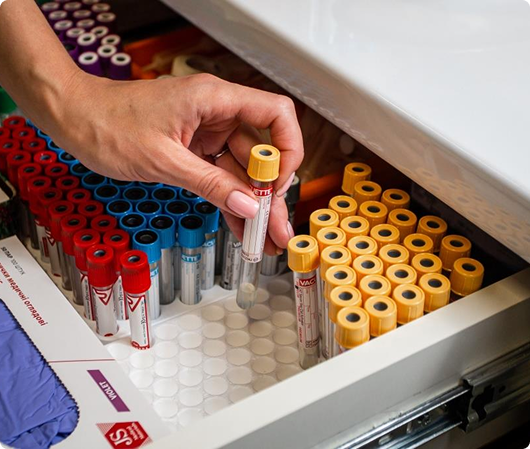
A blood test for hormones is one of the key stages, because hormones are the main indicator of a woman’s fertility.
Usually, the level of such hormones is checked:
- FSH is responsible for the maturation of eggs;
- LH – stimulates ovulation;
- prolactin – affects ovulation and the menstrual cycle;
- estradiol – regulates the menstrual cycle;
- progesterone – responsible for embryo implantation and pregnancy maintenance;
- testosterone – an excess can lead to a cycle disorder;
- AMH – reflects the ovarian reserve, i.e. the number of eggs.
Additionally, tests are performed for thyroid hormones (TSH, T3, T4). Even minor deviations in its functioning can cause infertility or miscarriages.
Other studies
Depending on the situation, the doctor may recommend hysterosalpingography (assessment of the patency of the fallopian tubes), testing for infections (TORCH complex, STDs), immunological or genetic tests.
Such a checkup allows you to draw up a complete picture of a woman’s reproductive health and choose the best way to treat infertility.
Sign up for a consultation
Leave your contact information and our consultant will call you back and select the most convenient time, date, and doctor for a visit to the reproductive center or online consultation.
The cost of infertility diagnostics in women
The price depends on the scope of research, the type of tests prescribed, and the methods of diagnosing female infertility. For example, at IVMED, a basic assessment of a woman’s reproductive system costs UAH 2,160.
However, you can find out the exact cost of the necessary tests during a consultation with a reproductive specialist: the doctor will develop a personalized diagnostic plan based on your age, medical history, and the length of time you have been trying to conceive without success. This will allow you to calculate the costs and avoid unnecessary procedures.
Doctors of the IVMED clinic








Causes of infertility in women
Reproductive health problems can be caused by various factors. The most common ones are:
- hormonal disorders;
- endometriosis;
- obstruction of the fallopian tubes;
- polycystic ovaries;
- chronic infections;
- adhesion disease (adhesions)
- after surgical
- interventions on organs
- of the pelvis;
- autoimmune factors;
- age over 35.
In addition, the success of fertilization is affected by overweight or, conversely, underweight, bad habits, and chronic stress.

Methods of diagnosing female infertility
A comprehensive infertility evaluation for women involves the use of both basic and specialized techniques. The more thorough the examination, the more accurately the specialist will be able to determine the cause of the problem and select an effective treatment plan for the specific patient.
Ovulation tests
Ovulation, when a mature egg is released from the ovary, is the key event of the menstrual cycle. If it does not occur, conception is not possible. A luteinizing hormone test helps determine whether ovulation is occurring and assess its regularity.
Hysterosalpingography (HSG)
An X-ray examination in which a special contrast dye is injected into the uterus to visualize it and check the patency of the fallopian tubes. HSG helps diagnose adhesions, tubal blockages, polyps, submucosal fibroids, or congenital abnormalities of the uterine structure. This method is one of the key methods used in the diagnosis of female infertility.
Laparoscopy
A modern, minimally invasive procedure that allows a doctor to examine the pelvic organs—the uterus, fallopian tubes, and ovaries—without making large incisions. Small punctures are made through which a camera and instruments are inserted for a detailed examination. Laparoscopy is not just a diagnostic tool, but also an opportunity for simultaneous treatment: the removal of adhesions and polyps, as well as the removal of cysts or endometriosis lesions.
Immunological examination
Sometimes all the test results are normal, but conception still does not occur. In such cases, immunological infertility is suspected—a condition in which a woman’s body produces antibodies that attack sperm or prevent embryo implantation. Laboratory tests help determine the presence of antisperm antibodies in cervical mucus or blood plasma.
These methods help to make a complete assessment of reproductive health, especially if the diagnosis of female infertility is carried out correctly. In the Kyiv-based fertility clinic IVMED, such tests are performed according to modern protocols using advanced equipment, which significantly increases the chances of becoming parents.
When should you undergo infertility diagnostics?
If pregnancy does not occur within 12 months of regular sexual activity without contraception, this is a signal to undergo an examination.
Women over 35 should not wait so long: it is better to start diagnostics after 6 months of futile attempts.
You should also consult a doctor if you have any of the following: menstrual irregularities, frequent inflammation, lack of ovulation, or a history of miscarriages.
Preparation for the diagnosis of female infertility
To ensure that the results of examinations are correct, it is important to follow certain rules:
- Avoid sexual intercourse 2-3 days before the tests.
- Do not take hormonal drugs without a doctor's approval.
- Undergo an ultrasound at the time specified by the doctor (usually on day 5-10 of the cycle, sometimes also on day 25-28 of the cycle).
- Blood tests for hormones are taken on an empty stomach, on certain days of the cycle, which will be informed by the doctor.
You should also be emotionally prepared – fear and stress can negatively affect the results, especially of hormonal tests.
Diagnosis of infertility in a couple
Difficulty conceiving isn’t always the woman’s fault. In half of all cases, it’s due to a male factor. Therefore, infertility diagnosis should be comprehensive, meaning it should include an evaluation of both partners.
To assess reproductive health, men are prescribed:
assessment of sperm count, motility and morphology
detection of the presence of antibodies that “attack” sperm (immunological infertility)
detection of disorders in the hormonal system
detection of infections that can cause inflammation and impair sperm quality
allows you to detect genetic damage to sperm that directly affects fertility
examination of ejaculate for chromosomal mutations
detection of inflammatory processes, varicocele, structural changes in the testicles, etc.
analysis of blood circulation in the genitals
for the assessment of spermatogenesis, detection of oncological diseases
A comprehensive examination allows you to determine exactly who has the problem and, based on this, choose an effective solution for the couple.
How to choose a clinic for the diagnosis and treatment of infertility in women?
When choosing a medical center for the diagnosis of infertility in women and men, you should pay attention to the following criteria:
- qualifications of reproductive specialists;
- availability of modern equipment and our own laboratory;
- the opportunity to undergo a full range of examinations in one place;
- transparent pricing policy;
- positive feedback from patients.
Based on these criteria, the IVMED Reproductive Medicine Clinic is considered one of the best. Here, patients receive comprehensive infertility evaluations and state-of-the-art treatment in accordance with international standards.
Treatment based on the results of infertility diagnosis
Once the results are in, the doctor develops a personalized treatment plan. This may involve a course of medication, surgery to address the anatomical causes of infertility, or a program using assisted reproductive technologies (intrauterine insemination, IVF, use of donor gametes, or a surrogacy program). Following the advice of specialists, having your partner’s support, and trusting the clinic you’ve chosen will help you take a confident step toward your most cherished goal—the birth of your child.
Modern medicine offers many options for help even in difficult cases. The main thing is not to hesitate, because the path to motherhood begins with the correct diagnosis.


Extract of information from the License Register of the Ministry of Health of Ukraine for medical practice

DSTU ISO 9001:2015-1 Certificate

DSTU ISO 9001:2015-2 Certificate

ISO 9001:2015 Certificate
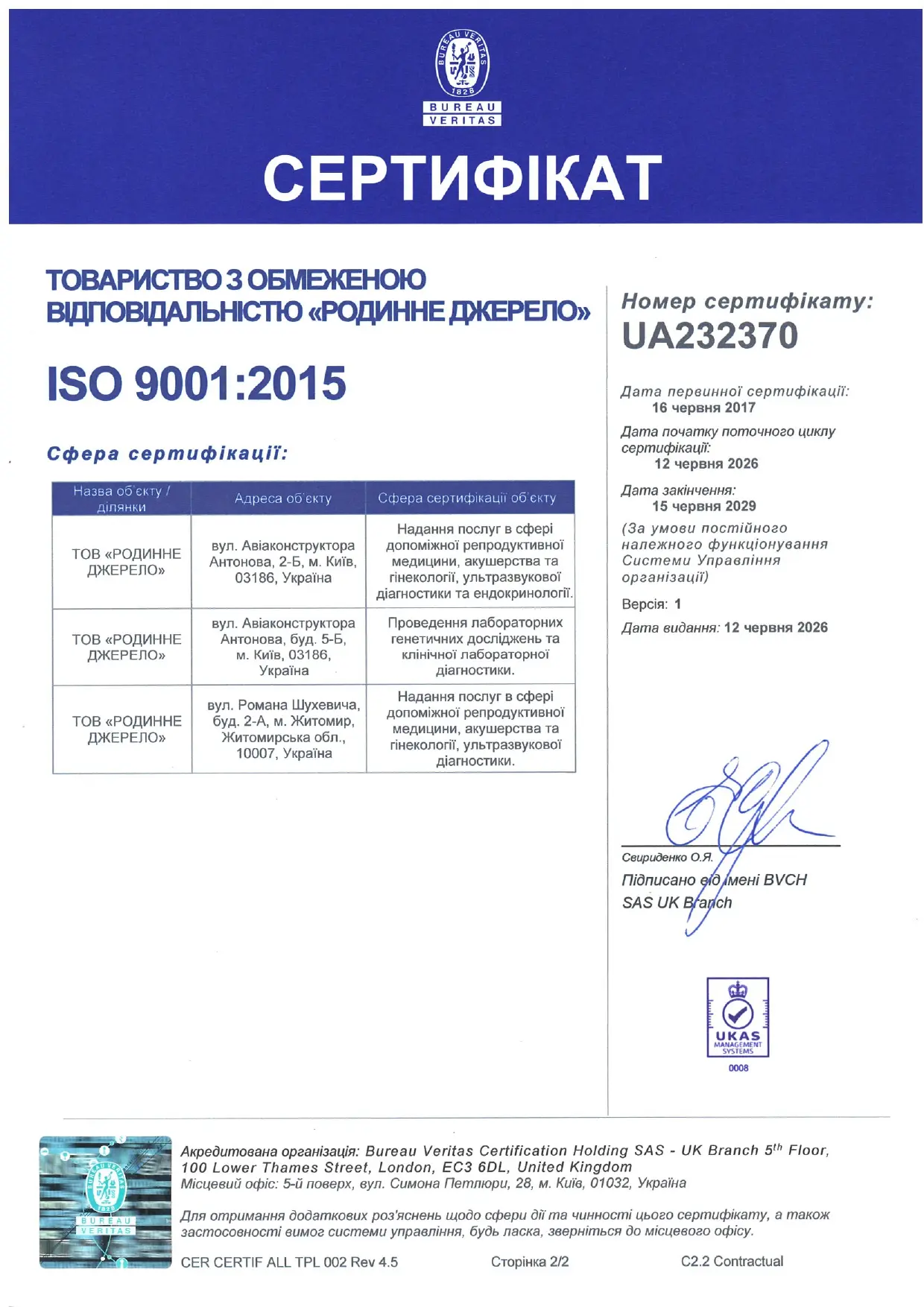
ISO 9001:2015 Certificate No. 2

Accreditation certificate of the highest category