
Features and possibilities of IVF in polycystic ovaries Polycystic ovary syndrome (PCOS) is one of the most common causes of infertility in women of reproductive

That is why the main task of every couple is to make a timely decision about having a child when female and male fertility is at its peak and the genetic information in the germ cells is not damaged by age-related changes. The mission of reproductive specialists is to help infertile couples give birth to a healthy child at any reproductive age, using all the available capabilities of the body and involving all available technologies. This is the mission of the IVMED Reproductive Medicine Clinic.
With age, the number of antral follicles in the ovaries decreases exponentially. And along with them, the number and quality of eggs, each of which could give rise to a new life, decreases.
During menopause, ovarian function gradually fades away:
And although the ovaries continue to synthesize hormones in minimal amounts, they are no longer needed for reproductive function, but for the smooth adjustment of the body from youth to old age. This residual endocrine function of the ovaries helps older women avoid hormonal disorders, protect the cardiovascular system from sudden fluctuations in blood pressure (the so-called "hot flashes"), and age harmoniously and aesthetically.
The main reason for all the risks associated with having children at an older reproductive age is the limited biological age of eggs. Because unlike men, who have spermatogenesis every 72 days, the ovarian reserve is formed during fetal development and grows up with the girl. Therefore, the older a woman is, the older her eggs are. If a woman is 45 years old, her oocytes are also 45 years old.
Therefore, we have a clear answer to the question of how old you can get pregnant without risking yourself and your baby:
1) It is advisable to have your first child at the age of 20-28;
2) the second child - up to 35 years of age.
Not every pregnant woman of older reproductive age will necessarily have complications, but this is a risk group, the most common of which are:
After making the decision to become parents in adulthood, it is necessary to consult a reproductive specialist. Preparation for pregnancy necessarily involves:

Assisted reproductive technologies (ART) are methods of diagnosing and treating infertility that are used for reproductive disorders in women and men. This is not only a choice for those "over 40" - because reproductive potential is assessed individually and does not always depend on age.
However, if a woman has already reached the age of childbearing, the following ART will help her become a mother (the choice of method depends on medical indications):
1) in vitro fertilization using own oocytes (IVF);
2) Pronuclear transfer (PNT) or mating spindle transfer (MST) are innovative alternatives to egg donation to preserve the patient's DNA and utilize the mitochondrial potential of the female donor;
3) oocyte donation;
4) embryo donation or surrogacy (in the most difficult cases).
IVF with donor eggs is a program for those women who, due to advanced reproductive age, premature ovarian depletion, ovarian surgery, or hereditary diseases with a risk of transmission to their offspring, do not have their own oocytes of adequate quality. The only prerequisite for a successful pregnancy with donor oocytes is a healthy endometrium and uterus capable of implanting and carrying an embryo.
Despite the possible risks, late pregnancy has significant benefits:
Pregnancy at a young age, even if it is achieved not naturally but through IVF, has undeniable benefits for the health of mother and child:
If you are definitely going to have children, but not now, but in the future, we will give you some important tips on what you should do today:
From the point of view of physiology, the best time of pregnancy for the birth of a healthy child is between the ages of 20 and 35.
This does not mean that a woman cannot become a mother in adulthood. After all, nature does not exclude individual fluctuations in the age at which one can give birth. In addition, there is always the possibility of conceiving and giving birth to children with the help of reproductive technologies: in particular, the program of deferred motherhood. And in the most difficult cases, through donation programs or surrogacy. However, a physiological pregnancy achieved naturally at a young age has been, is, and will be the best option for women's self-realization and procreation.
The team of doctors at the IVMED Fertility Medicine Clinic is ready to accompany you at all stages of family planning: from deciding to have a child to a comprehensive examination, in vitro conception and pregnancy management. Pregnancy planning and professional preparation for conception and childbearing are the key to success in any clinical case of infertility. Such preparation allows women to realize their motherhood in good physical shape and psychological readiness.
Features and possibilities of IVF in polycystic ovaries Polycystic ovary syndrome (PCOS) is one of the most common causes of infertility in women of reproductive
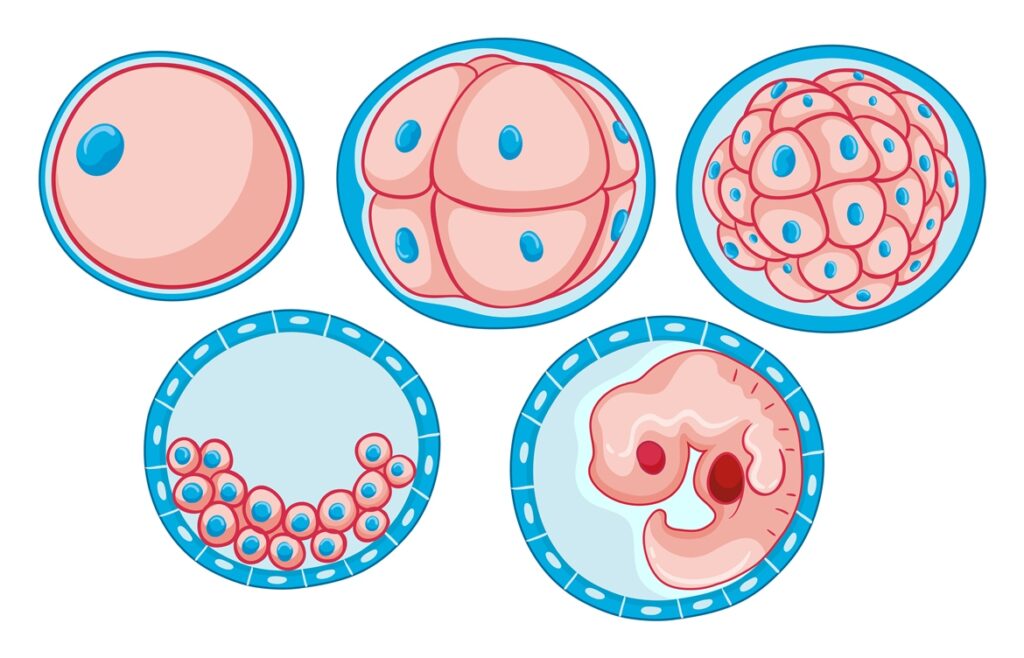
Modern reproductive medicine provides ample opportunities for couples facing difficulties in conceiving. Successful embryo implantation in such cases can be achieved through such a procedure